The blank forms are free. Knowing what to do with them is the hard part.
The Courts Service will give you Form 2N, Form 37A, and Form 37B at no charge. What they will not give you is a filing sequence, a deadline tracker, a vouching checklist for your financial disclosure, or a plan for what happens when your spouse ignores the papers.
Over 60% of family law cases in Ireland involve at least one self-represented litigant. Most of them are not failing because the law is impossibly complex — they are failing because they filed documents in the wrong order, missed a ten-day response window, or walked into a case progression hearing with an incomplete Affidavit of Means. One procedural slip can add months to your timeline or leave your settlement unenforceable.
The Circuit Court Filing Blueprint
This is not a book of legal advice. It is a project management system for your divorce filing — the same sequencing logic that a solicitor's office uses to move your case through the Circuit Court, translated into checklists, worksheets, and tracking sheets you can work through yourself.
Where a solicitor charges €1,500 to €5,000 for an uncontested consent divorce, and document-preparation services like Easy Divorce or Simple Divorce charge €699 to €750 to populate templates, this guide gives you the structural tools to organise and file your own case for a fraction of that cost.
What's Inside
The Chronological Sequencing Map
A visual filing timeline that covers the entire Circuit Court process — from issuing the Family Law Civil Bill through to receiving the final decree. Paper filing and Courts Portal tracks mapped side by side, so you know exactly which route is available in your circuit and what each step looks like.
The Consent Pathway Playbook
If you and your spouse agree on terms, this section walks you through drafting a Terms of Consent agreement, filing the Entry of Appearance, preparing the Notice of Motion, and presenting your agreed settlement to the judge — including what "proper provision" actually means and how to satisfy the court that your arrangements are fair.
The Default Resolution Toolkit
When your spouse will not respond, Irish law provides a clear path forward. This toolkit covers the ten-day appearance window, the 14-day warning letter, and the motion for Judgment in Default — with a step-by-step sequence so you can move your case to hearing without your spouse's active participation.
The Affidavit of Means Vouching Ledger
Form 37A requires full financial disclosure, and "I forgot a bank statement" is the single most common reason judges send litigants away to refile. This structured worksheet tells you exactly which documents to gather — bank statements, P60s, property valuations, pension benefit statements — and how to organise them so the County Registrar can verify your disclosure on the first attempt.
The Proper Provision Budget Worksheet
The court will not grant your divorce unless it is satisfied that proper provision exists for both spouses and any dependent children. This household budget template helps you map out monthly expenses, maintenance obligations, and asset division in the structured format that judges expect to see.
The Case Progression Preparation Guide
If your case is not resolved on consent, it will go through case progression before the County Registrar. This section covers the questionnaire (Form 37N), the documentary evidence you need to have prepared, and what to expect during the hearing — including common questions the Registrar asks self-represented parties.
The Pension Adjustment Order Tracker
Pension splitting is the most technically complex part of most Irish divorces, and it is the one area where litigants in person most frequently leave money on the table. This section explains how to request a pension benefit statement from the scheme trustees, how a designated benefit is calculated, and the notification deadlines you must meet to avoid losing your entitlement.
Service of Process Tracking Sheet
Proving that your spouse was properly served is a foundational requirement. This chronological tracker covers registered post, personal service, and substituted service by email — with a checklist for completing the Statutory Declaration of Service and countdown timers for each response deadline.
Who This Guide Is For
- Couples filing on consent who have agreed on terms and want to navigate the paperwork themselves — saving thousands in solicitor fees while ensuring the court accepts their settlement on the first hearing
- Applicants with an unresponsive spouse who need a clear default pathway to move their case forward despite their spouse's silence or refusal to engage
- Litigants mid-case who started the process using free online forms but have hit a procedural wall — a case progression summons, an incomplete financial disclosure, or a pension that nobody knows how to split
- People preparing for a solicitor consultation who want to arrive with organised financials and a clear understanding of the process, cutting the solicitor's billable hours in half
Why Not Just Use the Free Information?
Citizens Information and the Courts Service website are excellent resources. They explain what the law requires. What they do not provide is a filing sequence that tells you when to do each step, what evidence to attach, and what to do when something goes wrong.
Reading about the Affidavit of Means on Citizens Information is useful. Working through a structured vouching checklist that tells you exactly which bank statements, payslips, and valuations to gather — and how to organise them into the format the County Registrar expects — is the difference between a successful filing and a case sent back for re-disclosure.
Document-preparation services like Easy Divorce (€750) and Simple Divorce (€699) will populate the blank forms for you. But they do not teach you how to manage your own case. When you need to respond to a case progression questionnaire, attend a hearing, or enforce a deadline against an unresponsive spouse, you are on your own again. This guide gives you the structural knowledge to handle the entire process — not just the forms, but the strategy.
Satisfaction Guarantee
If the guide does not deliver what this page promises — clear sequencing, practical worksheets, and a structured approach to your Circuit Court filing — contact us and we will make it right. No complicated return process, no waiting period.
Get Started
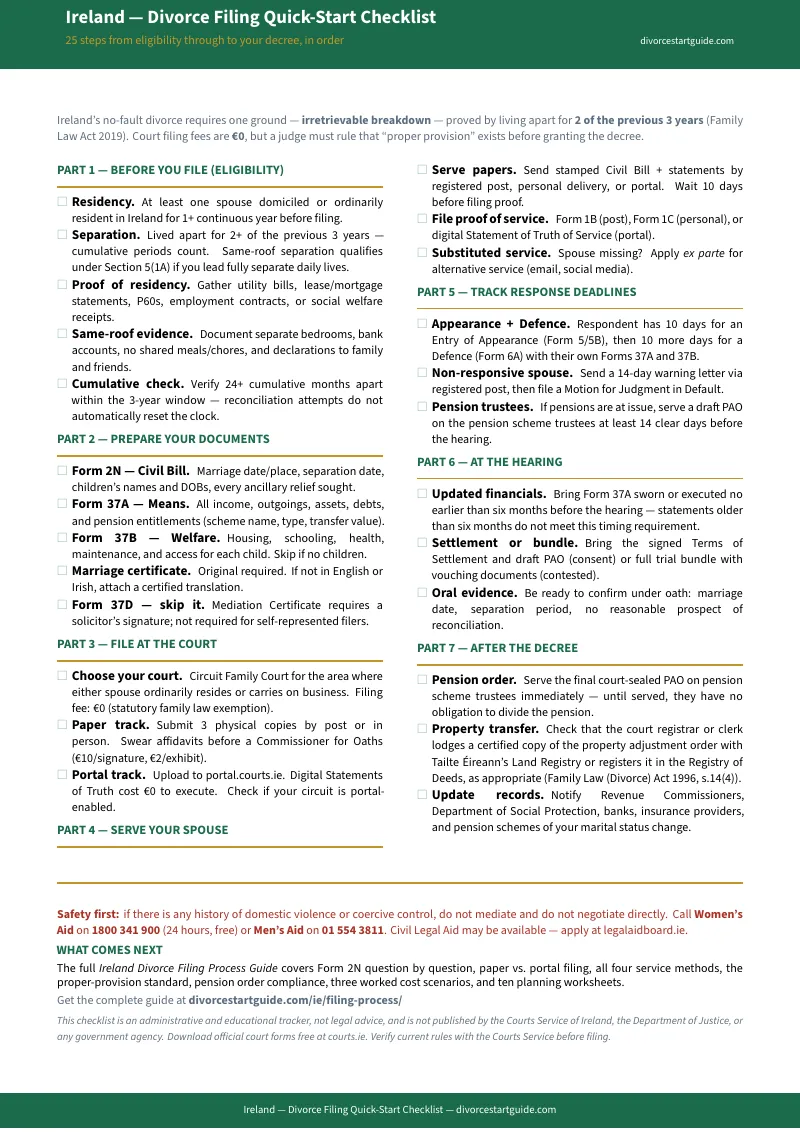
Start with the free checklist — a quick-start overview of the filing steps, residency rules, and waiting period. When you are ready for the full sequencing maps, financial disclosure worksheets, and case-management tools, the complete guide is waiting.